
Guest Post by Herwin Icasiano
Hype-a-million
The Social Network, the much-hyped film about Mark Zuckerberg and the founding of Facebook, debuted last month on October 1; it grossed more than USD 22 million during its opening weekend.
I still haven’t watched it, and I don’t think I plan on doing so, either.
However, some reporters and bloggers have used the film’s release as an opportunity to comment on Facebook as it is today.
While Shonali mentioned in an earlier post that some people don’t care about social media, there are others who care about social media, but vehemently think it’s EVIL.
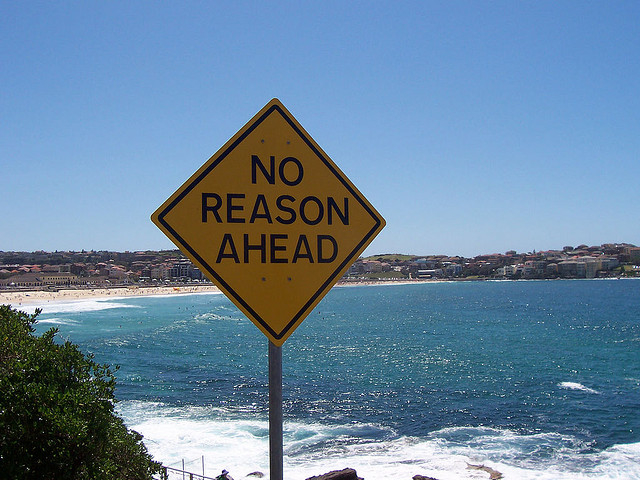
Image: Abby Chicken via Flickr, Creative Commons
Two writers on The Guardian (UK) have published articles that aggressively criticize the movie as well as Facebook.
Zoe Williams suggests in her piece that Facebook is nothing innovative. She asserts that most of the site is advertising – there’s a bar on the right side of the page – which the company’s apparent recent valuation of USD 35 billion might be due to.
Hadley Freeman goes even further, stating that Facebook is evil. Her article is titled “How evil is Facebook?” and her sub-head is: “Think of it as your life going down the drain while you spend hours casually stalking other people’s lives.”
Freeman boldly suggests that God would disapprove of people using Facebook; it cost Mike, her imaginary average Joe, approximately “117 hours, 47 minutes and 56 seconds” of his life, after all.
Facebook certainly has its share of problems.
Phoebe Prince, a 15 year old Irish immigrant living in Massachusetts hung herself in January 2010 after being bullied not only in person, but also through text messages and Facebook. Malicious comments were even made, after her death, on a Facebook Page established in her memory.
The latest series of suicides by gay or suspected-to-be gay individuals also show evidence of cyber-bullying.
In addition, Facebook’s views on users’ privacy isn’t received well by some writers in journalism and the blogosphere. I don’t agree with them, and neither does Ben Popper on BNET.
But I do acknowledge that Facebook’s privacy scandals has had considerably negative publicity.
Facebook isn’t EVIL, though.
The social networking site and its users has accomplished many positive things.
When the California Supreme Court decided not to overturn Proposition 8, the referendum that outlawed same-sex marriage in the state’s constitution, protesters used Facebook to swiftly spread awareness of the decision and to invite others to rally at local events. San Francisco’s Facebook event had over 1,300 confirmed guests.
Barack Obama’s 2008 presidential campaign recruited Chris Hughes, a 24 year old founder of Facebook, to work in their new media division.
Hughes used his social media experience to launch online outreach efforts through Facebook, Myspace, Twitter, and YouTube; profiles were also created on niche sites such as BlackPlanet for African-Americans and Eons for baby boomers.
 Obama’s Facebook Page included an invitation to become a supporter of the campaign and information on voting locations.
On Election Day, more than 5.4 million users informed their friends, through the Facebook Page, that they voted.
This support was funneled into Obama’s own social networking site, MyBarackObama.com. According to statistics published on ReadWriteWeb, 200,000 offline events were planned, 400,000 blog posts were written, and more than 35,000 volunteer groups were created using the site.
Facebook also partnered with ABC in 2008 to provide election and debate coverage through a Facebook application. The network will again partner with Facebook to cover this year’s midterm elections; users will have the opportunity to ask questions and submit comments to ABC for broadcasts and local debates.
Facebook’s good side isn’t all about politics, either.
WNEP-TV in Pennsylvania reported on Steve Hutchings, a man from Missouri who was at risk of kidney failure and put on dialysis this past summer. Hutchings posted a status update on Facebook about his situation; his high school friend from Pennsylvania saw the message and volunteered to donate a kidney.
Jennifer Aaker’s book, The Dragonfly Effect, was inspired by Sameer and Vinay, who were diagnosed with leukemia and have similar stories.
I recently learned of Sanjana, a mother of young twins, who was diagnosed with multiple myeloma and urgently needs a matching marrow donor; her support network is publicizing her story on Facebook not only to find Sanjana a match, but to encourage others to register with the National Marrow Donor Program.
Consider sanity
Jon Stewart of The Daily Show has planned a Rally to Restore Sanity for tomorrow, October 30, on the National Mall in Washington, DC.
I won’t attend since I couldn’t afford to buy a plane ticket.
But I think that the main purpose for the event is worthy of attention: that the loudest and inappropriate voices shouldn’t be the only ones that matter.
President Obama agrees with Jon Stewart: he thinks the media has become very splintered; the more controversial their statements are, the more attention they will get.
I think this perspective applies to the two Guardian articles I mentioned and to many of the comments I’ve read about Facebook.
While some people may not agree with the way Facebook has operated, and though some users have used Facebook for harmful purposes, to label the social networking site as evil or not innovative is unwarranted.
Social media has further enabled humans to do what we have been doing for millenia: socialize; and socializing is neither inherently good nor evil, as it all depends on the actors.
Instead of contributing to polarization, let’s instead promote the opposite: moderation.
 Reporters, bloggers, and writers most certainly have the right to criticize Facebook’s policies and those of other institutions, but we should do it intelligently and within the contexts of other facts.
Image: Marc Soller via Flickr, Creative Commons
Monica Hesse of The Washington Post accomplishes this feat well, with an article on social media and activism, published more than a year before Malcolm Gladwell’s presently controversial piece.
She questions the effectiveness of “Facebook activism” without including polarizing statements, and highlights successful stories as well.
In an era where an individual’s words are easily disseminated throughout spheres of discussion, sanity shouldn’t be a hope, it should be a requirement.
 Herwin Icasiano is a recent Stanford University graduate. He does his best to stay informed on politics, tech, music, cultures, and social media. Herwin has a strong interest in pursuing a career in public relations, helping companies and organizations make personal connections past the corporate-consumer dynamic, both on- and off-line. He dreams of traveling the globe, experiencing a wide array of cultures, and making worldwide connections. He’d love to grab a gab on Twitter.





Herwin – thank you for the thoughtful post. It brought to mind a reminder: target users and critics are sometimes yet not always the same audience. It creates a fine line to walk I believe for Facebook ie to clearly decipher useful feedback that could enhance (& respect) user experience — from the critiques that will remain far outside Facebook’s ideal user persona. And even with that premise in play, maybe all critique for Facebook, in and beyond it’s privacy issues, should be acknowledged. It appears however that complaints like “Facebook is evil” stem from a non-user user — as in, someone who uses the social platform yet who is not socially minded. They voice complaint without interest to improve or take action but rather voice to combat a tool that represents an era that they do not acknowledge as legitimate.
Great thoughts Jill!
I definitely think the lines are blurred, skewed, and maybe even bent in all sorts of ways due to the fact that Facebook has over 500 million users in addition to those who observe, but do not use the service; that’s larger than the United States, so I’m sure it’s a tough job to monitor all the feedback that’s been published on the web or sent to them.
This cool infographic sizes up Facebook, Myspace, and Twitter against the largest countries: http://www.economist.com/research/articlesBySubject/displaystory.cfm?subjectid=7933596&story_id=16660401
I also think the large user base adds possibilities to Facebook’s ‘ideal user’; especially considering there have been many features that were implemented, but not required as part of the service–applications, Questions, games, Groups, the Marketplace.
Facebook does a great job of providing choices for these features, but I think much of the criticism is directed toward user interface, style, and more technical/information issues, including privacy. If Facebook starts to value choice in these areas more, a lot of the more conservative users would probably be happier. (They just shouldn’t go overboard like Myspace did with their profile designs back in the early 2000s; now that was just too much.)
And yes, the diversity and size of their user base does not excuse Facebook from listening to their current and prospective users, acknowledging their concerns, and making changes when the concerns are valid. Although I deeply believe in filing grievances with a certain level-headedness, I do think finding the rationale and logic behind impassioned critiques can help to calm some angry dissenters.
The “Facebook is evil” complaints are probably from a “non-user user;” great point. I think it’s what Sheldon was hinting at in his comment: “people love to complain about things like facebook, but then never act on anything.” Having someone waste their life by stalking people on Facebook is more of an education and outreach issue; and you’re right in that these observations are made out of either fear or an unwillingness to acknowledge a changing society.
There was a study in 2009 that falsely reported a correlation between being a Facebook user and having a low GPA; it reminded me of complaints that were against allowing children to watch television. Although I think studies like these are important to cover because they do inform us about how media interacts with other areas of society, the results are either influenced by overly negative comments or skewed, after completion, by those who fear change.
Freakonomics’ blog post on the article here: http://freakonomics.blogs.nytimes.com/2009/05/08/correction-facebook-does-not-make-you-stupid/
Have a great rest of the weekend!
Herwin – I would definitely recommend you watch “The Social Network” I was hesitant to do so, figured I wouldn’t get much out of it, etc. I watched it due to my wifes encouragement. She doesn’t use Facebook or Social Media for that matter but enjoyed it enough to see it twice while I caught it for the first time.
Keep on blogging my friend!
Joe
Hey Joe,
Thanks for your thoughts! Alex Talbott (a_double_tt) also recommended I watch the film.
I can identify with what you were thinking; something about how Zuckerberg was portrayed in the trailer made me feel it wasn’t worth watching. I suppose I should give it a shot if you and your wife liked it, though. Perhaps I’ll see it when it’s released on Netflix…or if someone drags me to the theater.
Hope you and your family had a good Halloween!
Nice post.
I think that people criticizing facebook is an interesting topic. For one, people want it to be all about them, but they forget that behind everything Facebook is a business and they have to do what works well for them.
The other thing I find quite interesting is that people love to complain about things like facebook, but then never act on anything. Remember “quit facebook day” earlier this year?? I saw they had tons of people sign up for the “event”, but how many actually quit facebook? I don’t have an exact number but I can tell you it wasn’t a lot.
Social media can be used for good if people choose to use it that way, and I think that more people are inclined to do so than use it for “evil”. The people that take the negative perspective on it usually never act on any of that negativity, so I think the good fight being won.
Cheers,
Sheldon, community manager for Sysomos
ps. I lived at that beach in the first pic (it’s Bondi Beach in Sydney Australia) and I got really excited when I saw it
Thanks Sheldon for the comments!
Just looked up Bondi Beach on Wikipedia; it’s beautiful.
I agree that Facebook is a business and they need to consider their priorities, but I think an important priority is user experience. Of course, heeding to the whims of an emotionally-charged, but irrational majority (or minority) is not sound practice; however, listening to your community, acknowledging their concerns, and making changes when they do make sense is important.
It is definitely interesting how some people may complain without any follow-up. Their complaints still pose a problem, though; to not address those complaints and to stay silent would establish a greater opportunity for any falsities or negative spin to disseminate through the Internet. In the case of Facebook’s latest privacy scandal, I’m glad that Facebook and some journalists have taken the responsibility to point out any falsities of complaints made against the site and to take further steps in addressing concerns that are rational and legitimate.
Although I have yet to garner any professional experience in crisis management, I think formulating strategy from a logical perspective helps in almost any situation.
Have a great weekend!
[…] This post was mentioned on Twitter by Shonali Burke, Shonali Burke, mikeschaffer, Tinu Abayomi-Paul, Jeff Brathwaite and others. Jeff Brathwaite said: RT @tinu: MUST READ: Facebook for Sanity http://t.co/WkMipa4 by the great & powerful @shonali […]