
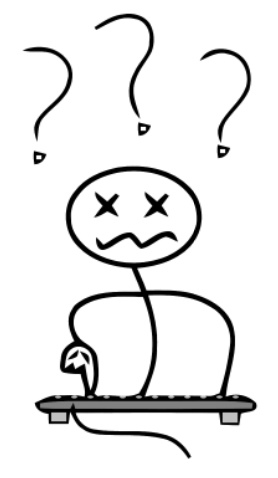
 “I don’t know.” These might be the best three little words you can use as you build your business. And here’s what got me thinking about this:
Ken Mueller’s post a couple days ago was terrific. You should go read it, if you haven’t already, but the gist of it is that when you don’t know what you don’t know, it’s far smarter to admit to what you don’t know rather than to pretend you do know what you don’t know.
I’ll give you a couple of seconds to digest that.
And… we’re back.
I think this is a good rule of thumb for anyone. Most of us are honest, decent people, who want to help each other out. And often we say “yes” when we mean “no” or “I don’t know,” either because we got caught up in the excitement of the moment (someone asked us! w00t!), or that we just didn’t want to let the person asking down.
The problem is that once we’ve said we do know ______ (how to do something, or what it will take to _____, and so on), then we’re expected to do it. To know. And in a business situation, we don’t always have the time to learn how to do what we don’t know well enough so as not to fall flat on our face.
And falling flat on our collective face, often enough, is the surest way to dry up the stream of prospects, assuming we have figured out how to turn it on.
Three little stories
There were three separate instances over the past three weeks where saying “I don’t know” helped my business:
1. A new client asked me if I undertook a particular process the way _______ did. I looked her right in the eye and said, “I’m not <a professional of that sort> so I don’t know, but this is how I do it.”
Turns out “how I do it” was enough for the client. And we are off to what I think is a very good beginning.
2. Another new client asked my opinion about a potentially hairy situation. I’d had all of an hour to read the briefing materials (internally they had been discussing the situation for months), so at the time, I gave them my honest opinion.
But enough was said to make me wonder whether I’d given them the right advice. So after a few days of thinking long and hard about the situation (the weekend fell in between), I reversed my opinion and said so, and was willing to shoulder any irritation/blame that might come my way.
It didn’t; in fact, it made the situation a little easier when the client realized that the “expert” was saying, “Hey, I don’t know if what I said earlier was the right thing for you, let’s talk about this some more.”
Once I gave them the revised advice, with the reasoning why, they actually appreciated what I said more. Again, a more comfortable situation all round and, hopefully, one that will culminate well.
3. Someone I absolutely don’t know found me, somehow, and wanted to consult with me on an issue that is not strictly a digital media or social/PR issue, but more of a “personal communication” and perception issue.
Of course I was flattered… but I was confused.
Was I somehow branding myself as a personal or life coach? Because that’s the kind of professional who’d normally be called in to handle such a situation. And if somehow that is how I am coming across, I need to do a much better job of marketing my business!
Turns out, that’s not who the prospect wants, but my advice on certain elements of presentation and inter-personal communication… and certainly, that is something I believe I’m equipped to give.
I highly doubt this prospect will convert into a consulting client, but it’s a great way to evaluate certain elements I plan to incorporate in my business moving forward.
Connecting the dots
I hadn’t connected the dots until I read Ken’s post, and then the penny dropped: by saying “I don’t know” when I truly didn’t know helped me immensely. Because I didn’t pretend to be smarter than I am; because I could empathize with the situation they were in and, ultimately, by doing the absolute best job I can for them without a smoke and mirror show.
And this will help me brand and grow my business the right way, so that I can continue to do the work that’s right for me… at least, more often than not.
I’m not saying that I will answer “I don’t know” every time someone asks me a question – I certainly hope I don’t! – but it is very liberating to admit to when you don’t know something. Heck, where would the fun be if we knew everything all the time?
So thanks to Ken for sparking this post. I don’t know… gotcha!
And now – it’s your turn… what about you? Have you found saying “I don’t know” has helped you more often than not? Are there other words you use as a business mantra? Do share, I’d love to know!
Image: Guudmorning! via Flickr, CC 2.0





This is a classic, Shonali. I think, back to your title and the point you made about how your brand is perceived, that saying “I don’t know” helps you focus your brand better every time. You can make the decision whether the knowledge is something your brand is missing and learn it, or refer the questioner somewhere else. Either way, you know a little better now what your brand is (and what it has the potential to be) and what it isn’t.
[…] Shonali Burke – Grand Poobah who does social faster than a …cheetah […]
[…] your own skills. Why not let your difficult boss be the motivation you use to better yourself? 5 Tips for Surviving an Unfair Boss Every job has stress, but the workplace environment can seem alm…ou do need to be able to co-exist and co-operate with him for you to be productive and successful at […]
[…] to you), meeting the right people and experimenting. I know a lot of small business owners with great ideas, and they have been nothing but […]
[…] The Best Three Little Words for Branding Your Business (waxingunlyrical.com) […]
[…] Shonali Burke – Grand Poobah who does social faster than a …cheetah […]
[…] Shonali Burke – Grand Poobah who does social faster than a …cheetah […]
I also read Ken’s post, it was outstanding. Now… today I was meeting a prospective client for the first time. They had issued an RFP for a consultant with about a thousand points of qualifications. I told them I was good at maybe three of these things, and I told them why I though I could help them. They proceeded to ask me “How would you handle a situation like _____” for about 5 scenarios. I used your three magic words over and over again, and described why it would be foolish for anyone to come to a conclusion based on the scant info provided.
It led to some great conversation. I those are three powerful little words!
barrettrossie Don’t you LOVE those RFPs?! I mean, which company can possibly fulfill each and every requirement?!
Oh! Oh! Oh! I just did this this week! A client asked my opinion about a proposal from a vendor I would manage. I didn’t understand some of the technical stuff and said so. I said I needed to do some research because I’ve never heard of such and such, and make sure it’s necessary. You know what? You’re exactly right. He loved that I ad tired I didn’t know. It bridges the gap in trust. If we’re willing to admit to weakness, they know we aren’t blowing a bunch of hot air somewhere. :)
Lisa Gerber And bridging that trust gap is huge. 99% of the time when we “fail” it’s because that bridge has collapsed. No?
Saying “I don’t know” can be so liberating, especially with a client situation. We’re naturally putting a lot of pressure on ourselves to have answers for folks, so much so that it might tempt us into thinking we should answer regardless of whether we know or not. That’s a bad trap to fall into and it sounds like you handled it beautifully – truthfully and with the client’s best interest in mind.
EricaAllison It really is! And I think many of us in this business are pleasers by nature, so we want to say “yes” to everything. Bad. Except if you’re howiegoldfarb, because then you break every rule in the book automatically. ;)
“I don’t know” is huge for me. I’ve found that people appreciate the honesty. I think I first learned the concept while selling shoes. Strangely enough, I sold more shoes because of it.
The statement also makes me think of an essay I was reading in preparation for SXSW. In it, the author (Wislawa Szymborska) says that “I don’t know” is a hallmark of inspiration. The phrase causes one to pause and to consider what one knows and doesn’t and where to go from there.
Erin F. You sold shoes? I had no idea! Now I want to know your shoe-selling stories.
I love that phrase, Erin. Thank you for sharing.
Oh, and I’m pretty sure dfriez and gojohnab would join me on the shoes (for starters)…
Shonali Erin F. I agree on the honesty. People appreciate it and they will often still buy the service/product, because they know what to expect.
dfriez Yes, and they are more likely to do business with you in the future too! Erin F.
Shonali I did. I worked at a Nine West for about a year. I blame that job for my love of shoes. :)) Before that, a short stint at a hardware store. I said “I don’t know” a lot at that job…
Erin F. Ha! So do you own a lot of Nine West shoes as a result? ;)
Shonali Actually, no. I never could afford them. I just learned to appreciate good shoes. :)
Such an important statement this post makes for each of us in our personal as well as our professional lives. I remind myself of these 3 words often and try to share with those I mentor the significance of “I Don’t Know.” Some come back years later and say the IDK bit I used was so helpful…and it sure is to me.
CarolHamptonRasco It’s amazing to me that there are things that YOU don’t know… :) but you are so right. Btw, you know who you should meet? ideaguypcam I think you two would get along famously.
Yeah, let me know how that works out for you…
Pay me now.
Great post Shonali! I agree, being up front and honest, will more than likely not get you in trouble. If it is a question about something specific, I tend to follow it up with, “I can find out more or let me do some research.” I find clients really appreciate it. You are right, saying “yes” can get you in trouble.
sher_32 Thanks, Sherrie! The other thing I’ve seen is that when you ask peers to help you out with things you don’t know, they are so generous with their time. I mean – just the way I started this blog is an example. I was so clueless, from what hosting provider to use, to how to use WordPress (five years ago it was a foreign language to me!) and so on. And simply asking for help brought me so much.
Thank you for stopping by – it was great to see you IRL yesterday and I look forward to doing so again very soon!
The beauty of actually admitting to “I don’t know” and clarifying is that you’re able to learn and do whatever it is you need to do better. Instead of acting like you know and then doing more work.
rachaelseda I know! And I think people respect it when you go out of your way to clarify something. I did it recently – about a month ago – when someone asked me to write a proposal, but first I really really REALLY wanted to understand what they wanted/needed. And it took a lot of asking, to the point where I thought the prospect might get irritated and say, “You know what? Forget it.” But they didn’t. And signed. :)
You are someone who asks questions fearlessly. I love that about you. I hope you’re still doing it!
Hey, thank YOU for sharing my post. I’m glad it could spark an idea for you and help you process your thoughts. I find the same thing happens to me when I read other people’s posts. And saying, “I don’t know” is so important, even with my own kids. I’m not going to make something up just to get them off my back (which I think is one of the reasons we are afraid to say it; we just want some people to leave us alone!). But I love your honesty and the way you approach things. I’m trying to do it myself more, and it’s hard, especially when I’m competing for business with someone who has apparently made grandiose promises on numbers, ROI, and other things. But sometimes clients find “I don’t know” refreshing. Especially when you couple it with something like, “but I’ll find out for you” or “but I think we can do such and such and I’ll work hard to get those results.”
KenMueller I wish one could say “I don’t know” to dogs and have *them* get off one’s back. At least, one can say it, but it won’t do the slightest good!
So just yesterday, someone was asking me my opinion about the content produced by a certain company has made a name for itself… producing and marketing content. It was so hard for me to say, I think most of it is crap, but it does what it’s meant to do, which is get people into the beginning of the pipeline. But I did say it, and also said… if you’re asking me if that is right for you… well, I don’t know. But we’d have to figure it out together. As you’re saying, Ken. And boy, life is so much easier when lived that way!
Thank you for stopping by, and again for sparking the post. It was much needed!