Internal Doesn’t Mean Unseen: Sean Williams on #measurePR

April 12th, 2010

How’s this for going back in time in the age of now?

My second guest on #measurePR (all the way back in February) was the inimitable Sean Williams.

If you’re a measurement geek and don’t know him… you should. Not only does he have one of the brightest minds in our field, he has one of the brightest minds, period. I was lucky that Sean was willing to take some time out of his day to sit in on the chat when it was just a couple of weeks old, and he shared his thoughts on measurement, PR and ROI.

Since Sean teaches on Tuesdays and was  held up joining the chat, we chatted among ourselves for a bit, and shared our pet measurement peeves. Not surprisingly, the continued use of AVE, lack of benchmarking and “quantity v. quality” were common causes of angst.

Because it’s been a while since this specific chat took place and I didn’t grab screen-shots of the tweets immediately after, I can’t show them to you (if you know, and can show me, how to do that, I’ll be indebted to you forever). But here are some of the interesting/noteworthy points raised during the chat:

1. Lindsay Allen, on the value of proprietary formulas such as Cision’s “publicity value: “… they… wouldn’t/couldn’t tell us much about how it’s calculated since the formula is proprietary.” To which Sean replied that it needed academic review (which, IMHO, all formulas – btw, does anyone use ‘formulae‘ any more? – should be).

Sean went a step further to say his biggest pet peeve was proprietary methods, of which he wants one, so he can make money (don’t we all?!), but he’d want it independently reviewed for accuracy and value.

Rebecca Denison, whom I’ve profiled before, perceptively pondered whether folks sign on for a proprietary formula because it’s better than nothing and they’re under pressure to do so.

2. I asked Sean for his take on the difference between AVE and “weighted media cost,” to which he posited an extremely diplomatic answer. For what it’s worth, I think highly of the folks who authored this paper, but am still making my mind up about the measure.

To learn more about WMC, I suggest you read this paper on the Institute of Public Relations’ site, Katie Paine’s opinion (y’all know she’s my guru, right?), and Sean’s own musings on the subject.

3. Sean reminded everyone to do something so simple it’s unbelievable that most don’t: Set Measurable Objectives.

The second #measurePR chat transcript is yours for the asking.

Do have a read through when you’re at a loose end (or, as I like to say, in your copious free time). I think you’ll enjoy it.

What I can share, though, is a video of Sean talking about measuring internal communication, which I grabbed when I was in Cleveland a few weeks ago speaking to IABC/Cleveland (which rocks and you should join, if you’re in the area, btw).

And if you’re interested in internal communication, you should follow #icchat, which Sean hosts along with Susan Cellura. How’s that for a bonus?

Enjoy! And do join us from 12-1 pm ET tomorrow when we’ll be chatting with Chuck Hemann on measuring social media.

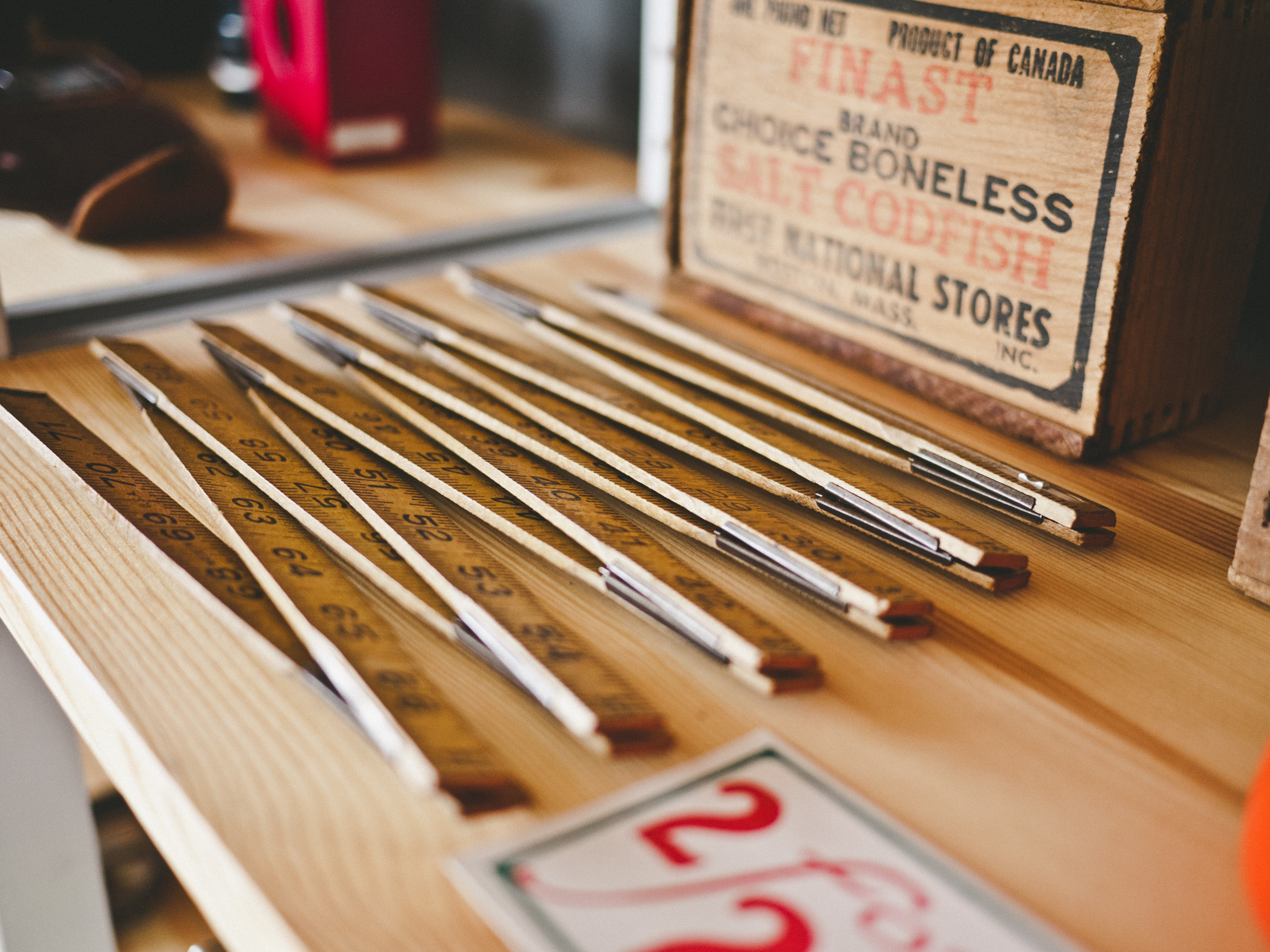
Image: Adam Groffman, Creative Commons

Sun, Sand and… Measurement

November 3rd, 2009

In a few days I’ll be Westward-bound; one of several hundred (or is it thousand?) PR and communication professionals converging on San Diego for PRSA’s 2009 International Conference (that’s me on Coronado Beach a couple years ago). My first experience of PRSA’s annual shindig was last year, when I was lucky enough to co-present with Katie Paine on measurement in Detroit.

The entire experience was a blast, and it will also live forever in my memory because that’s where I first met the beauteous and brilliant Shannon Paul and Lauren Vargas, caught up with the dynamite Kami Watson Huyse, first encountered Jason Falls, and was dissed (and defended, thank you Kami!) at my first tweetup. Ah, the good old days.

This year I’m lucky enough to have been selected by PRSA as a solo speaker and will be presenting on measurement on November 9 (here’s an interview I did to promo it a while back). If you’re attending the conference, do come by.

But more than plug my session, I want to pick your brains.

See, the thing is, my take on measurement is very simple (and yes, has been strongly influenced by the afore-referenced Sashet, the Measurement Goddess, aka Katie Paine).

You start at the end – what are your measurable objectives? And by “measurable,” I mean quantifiable and time-bound, not “increase buzz” or some crap like that.

You focus on what outcomes you’d like to achieve, not just outputs (like media impressions) and, if possible (because usually this takes some budget dollars), outtakes as well. A lot has been written about these recently, but I believe in going to the source, so here’s a great dictionary from the Institute for Public Relations (you should bookmark this).

And then you map out your strategy and tactics, track everything along the way, and then analyze the results of your program, based on what you were trying to achieve in the first place.

I like to use a couple of case studies, showing how this has been done both with “traditional” and social media, sometimes on a very tiny budget.

I show how, at my last job, we patiently tracked our communications against organizational key performance indicators, and how we were able to calculate – using a formula that was given to us by the equivalent of the marketing department – the value we added to the organization’s bottom line.

And I will tell you to stay away from ad value equivalency or AVE, which I hear IPR’s Measurement Commission recently voted down as a no-no when it comes to PR measurement.

My presentation’s probably not going to be earth-shattering for anyone (and I kinda hope it won’t, because the measurement debate’s been going on long enough).

What I hope it will be is engaging, and show practitioners who might be overwhelmed by all the jargon out there that measurement is not necessarily tough, mind-blowingly expensive, or tedious… and how to get started, or get back on the right track.

Looking for the Wisdom of Crowds

Here’s my question to you: are there any other questions you think I need to address? What else can I add to my presentation so that attendees can walk away with tips and ideas they can really use?

I can’t promise I can answer all of them, but I’ll try; if I can’t, I’ll try to find resources who can. Or, do you have tips I can include?

The bottom line is, I want the presentation to be about you, not me. So I’m asking you to help me deliver the content that will be most useful to you. I’m sure I can go it myself, but it’ll be so much more fun this way.

I’d very much appreciate your thoughts and feedback; just send me a tweet, or leave a comment below. I promise to give credit where credit’s due, and will be uploading it to SlideShare so that you can all see it.

Thank you!

One To Watch Out For: Rebecca Denison

October 14th, 2009

I’ve “talked” so often to Rebecca Denison recently that I’m liable to forget I haven’t met her IRL yet. Tell you what, this young lady knows the right way to network.

Rebecca, a “new professional,” and I first connected on Twitter, where she asked if she could pick my brain on career options. I said, “yes.” Then we set up a time to talk, and I was impressed with her lack of entitlement. So now I’m doing whatever I can to help her with her career goals.

Rebecca’s an odd cookie. I say that in a good way, because here’s someone, very new to the field, wh

o’s in love with research and measurement as it applies to PR. When was the last time you met someone like that? So I thought a Q&A with her would be interesting. You can also read more from Rebecca on some pretty cool blogs, including those of Lauren Fernandez, Mark Schaefer and Heather Whaling. Oh, and on her own as well (highly recommended).

Tell me about yourself. Brag a little.

I’m a recent graduate of the University of North Carolina at Chapel Hill, one of the best undergraduate journalism programs in the country. I studied biochemistry for two years at UNC until I realized that my heart just wasn’t in it. Despite switching to the journalism school, I never lost my analytical mindset and critical thinking skills, and I think that this really gives me an advantage. I also feel like I’m on the cutting edge, so to speak, as I was in the first class on PR measurement ever taught at UNC.

I have two sisters (one older, one younger) who have truly become my best friends as we’ve grown older and more mature.  I am an avid college basketball fan (Go Heels!) and love to run when I have time. I’m fun and bubbly and rarely get embarrassed, but I do end up laughing at myself a great deal of the time. I have a loving boyfriend, who I am excited to visit in Australia next month.

You’re unusual in that you’re a new PR professional who’s extremely interested in research and measurement, an area that many pros grapple with even after years in the business. How did this come about?

My passion for PR measurement was instilled in me by Katie Paine.  I really credit Katie and my professor, Dr. Craig Carroll for where I am today.  Dr. Carroll helped me choose the best courses to hone my measurement skills and asked me to work with him for a variety of extracurricular programs.

During my first class in the journalism school public relations sequence, I heard a guest speech from Katie Paine about PR measurement, and I fell in love. Because it was my first class in PR, I assumed that this was something everyone in the industry was doing, and I was interested to be able to help measurement grow and change. I talked with Katie after the class and ended up taking an internship with her at the end of the semester which lasted through the end of my collegiate career. What I learned while working with her shocked me: barely anyone considered measurement to be as important as I did. My professors at UNC and Katie all taught me extreme importance of measurement, and it’s hard for me to understand why there are folks out there who still haven’t embraced it in their own work.

Once I discovered my passion for measurement, but realized that there wasn’t a degree program which would fit this passion exactly, I knew that a degree in public relations would be the best choice. I learned a great deal about the industry and about PR, and I think this only enhances my ability to understand PR measurement.

Working with Katie has given me the absolute best experience in measurement, and I was able to work with one of my professors, Dr. Carroll, to find a specific passion.  I helped him with the Carolina Observatory on Corporate Reputation which studied how the reputation of the top 50 companies in North Carolina were portrayed by the media.

Now that I have graduated, I am eager to become more involved with social media monitoring and measurement.  Particularly I am really excited to help measurement grow and change with the social media space.

What are your observations on the state of measurement in PR?

I am still surprised at how new PR measurement seems to be. Because of my own timing, hearing about it in my very first PR course and then being part of the first PR measurement course, it’s something that has always been an integral part of PR in my mind. I cannot understand public relations without the measurement and research aspect.

It’s encouraging to see that lately PRSA and the Institute for Public Relations have both endorsed measurement, so to speak.  The PRSA recently sought to come up with universal measurement standards, which is definitely a great step in the right direction. As I said before, I’m still baffled by the number of companies and professionals that don’t seem to understand the incredible value and necessity of measurement. I’m even surprised at what kind of research passes as acceptable. Some clients I have worked with only want to know how many mentions they have, which to me is just the bare bones, skimming the surface. There is so much else to learn and know.

Have you found PR different in practice than what you were “taught” it would be?

I’ve found that PR measurement can be so much more than what I was taught. There are so many different dimensions, and it really all depends on what a client wants and what is possible. I haven’t had any traditional PR experience outside of the classroom as I’ve been solely pursuing measurement. I have noticed that measurement is not as pure as it was taught. I understand that there are practical limitations to some measurements that just weren’t addressed in the classroom.

You’re also extremely interested in social media. What’s the RD take on SM?

Social media is the next big thing, well, it is the big thing. Everyone is talking about social media, and it seems to be the opinion that almost all companies need to be moving into social media in some way. For me, I’m just thrilled to be able to watch the space evolve and match measurement to new types of needs. As conversations happen more and more, how will measurement change? What new metrics will there be tomorrow? It seems that new tools and metrics are popping up every week, and I just want to be part of it!

What’s your dream job/client?

My dream job would be to be able to work as a consultant or with a small company doing measurement. I would really love to be able to start from scratch with a client, and to figure out what kind of measurement to do based upon their needs and how they want to measure success. From there I want to be able to perform the actual measurement, write the report and help the client understand exactly what the data is telling them. If possible, I would even like to help become more involved in the strategy moving forward based upon research.

Your must-have PR/industry related books are…

The books that I’m reading right now (or want to read) are Trust Agents, Twitterville, Measuring Public Relations and Putting the Public Back in Public Relations.

Isn’t she something? Rebecca, you’re an absolute delight. One to watch out for, for sure.

Who are the other young professionals you’ve come across who you think are the future of our profession? What makes them special? Do give the props via a comment below.

Media By, For, And Of the Masses

September 24th, 2009

I read about this First Amendment Center report on traditional media still being the first news source for a majority of Americans in PRWeek today (I’m sending you directly to FAC’s site since you might not be able to access the PRW article).

That’s really not a “a-ha” moment for me, despite all the ballyhoo the ongoing debate about traditional media being dead. But it’s an interesting read, and I was fascinated by the way they tried in some cases to break down the finding by demographics (African-Americans and Hispanics are more likely than whites to trust Twitter as a news source… who knew?!).

Reading the survey findings reminded me of an excellent case study by Sean Williams that the Institute for Public Relations published a few months ago, on “how a financial services company used media measurement and content analysis to gauge the impact of financial turmoil on its brand and reputation.”

Because the fact is that regardless of whether you think traditional media is dead, dying or merely comatose while social media beams down indulgently, if your work has anything at all to do with media, you need to be measuring it… and measuring it right.

Sean’s case study, as well as his follow-up blog post on IPR’s site where he shares lessons learned, are must-reads for anyone into media measurement, and why I think he’s one of the smartest guys around today.

He might just be my holy cow of measurement.

Photo: Heidi & Matt

And The Award Goes To…

July 21st, 2009

Seems a day doesn’t go by that I don’t get flooded with invitations to enter award programs, and I’ll bet you suffer the same onslaught. Is it just me, or are there more awards programs, more invitations and more deadlines to deal with these days? Not to mention the fees.

Ribbing aside, each of us has their favorite awards programs – or the ones they’d be thrilled to win. I was curious about this, so I posed the question to communicators (on Twitter, of course), and here’s what I got:

Sean Williams said it was the Institute for Public Relations’ “Golden Ruler” as did Katie Paine (who’s a founding member of IPR’s Measurement Commission; (SNCR, PRWeek and PRNews‘ awards also ranked on Katie’s list). Here are a couple more responses:

Brenda Drake (@brenleigh) elaborated further via email:

“… Ideally, school PR professionals would be members of NSPRA and PRSA to stay abreast of the latest advances in the public relations profession both inside and outside of school divisions. There is so much we, as school divisions, can learn from other companies and organizations but if I had to choose, I would recommend NSPRA before PRSA because it specifically deals with the challenges that PR professionals face in the public school environment – bond issues, volunteers, changes in school policy, confidentiality issues related to students and personnel, working with city council/board of supervisors, etc.

I’d like to point out that I don’t believe school PR is more difficult than working for another organization. I do believe that there are specific differences between school public relations and other fields that support the cause for the NSPRA organization.  To further support the cause of niche-specific award programs, the fee for entering the NSPRA awards program is significantly less than other programs ($68-$90 per entry vs $260 per entry for PR News awards program).”

Peer recognition is a major factor, which is why IABC’s awards mean a lot to me (I haven’t as yet won any); and since I get my “jollies” from research and measurement, receiving a Golden Ruler Certificate of Merit together with Katie last year was a major high.

So here’s my personal plug for both of them: for all you research and measurement fiends, the Golden Ruler entry deadline is August 15; and while the 2010 Gold Quills are yet to be announced, IABC/Washington (disclosure, I’m president-elect) is accepting entries from communicators in the DC Metro area for the 2009 Silver Inkwell awards until July 31 August 15 as well (update).

Winning Tips

Entering your favorite awards program is all very well, but what we really want is to win. Here are some tips:

From Debbie Friez: Have actionable goals which can be evaluated, and actually do the analysis. Also, follow all the instructions!

From Leigh Fazzina: Sit on a panel and “judge” to see how many entries fail the submission criteria and do not follow entry instructions. Then one will know exactly “how” to enter. (I’ve done this, and I highly recommend it).

From Jennifer Wall Smith: Give yourself more time than you think you’ll need. Award entries are notorious time hogs.

A last word:

What’s your favorite awards program and why? I’d love to hear your opinion.

And finally – to all those entering their chosen awards program – may the force be with you.

Many thanks to all who responded, and not just on Twitter; you helped me put this post together. You’re all winners in my book.

~Photo: Balakov

Related Posts with Thumbnails
    Subscribe to Waxing UnLyrical

    The Waxing UnLyrical Community
    Couple Things…

    This blog is where I sound off, mellow out and generally articulate thoughts I can no longer keep inside my head. It does not reflect the opinions of my clients, former employers, or anyone else. Well, perhaps sometimes those of my dog, Suzy Q... no, seriously, it's just me.

    Oh, one other thing: my blog = my sandbox. To play here, please be nice. Polite argument and respectful agreements to disagree are fine. Abusiveness is not. And you take responsibility for your comments - just as this is my blog, those are your comments, not mine.

    Phew. Glad that's over with. Let's play.

    Work With Me

    The Waxing UnLyrical Archives